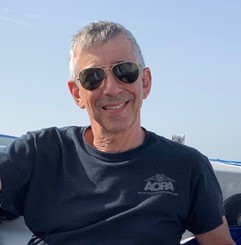

There comes a moment in everyone’s life, at a time between “I’ve still got it” and “where did it go?” when reality taxis up and applies the brakes. For me, that moment arrived at my gym. I have always been active and sporty, but consider myself an average soccer player, a capable, if ungainly skier, and an unsightly mammal when cycling. That should be MAML for “middle-aged man in Lycra.” Not a pretty sight for the motorists I impede!
There I was at the gym when one of the personal trainers yelped in pain when a weight fell on his hand. I leapt superhero-like off the treadmill (in reality fell on my rear end) and went into full-on doctor mode. Having applied ice, compression, and elevation to his traumatized fingertip and advising him to rest, we had a chat. “Ever thought of working with a personal trainer?” quoth he. Noting that he had muscles in places where I don't have places, I thought his expectations for me might be unduly enthusiastic.
I told this bruised bruiser that no, I had never even contemplated the idea, and he offered me a trial session the following day in gratitude for my compassion. Little was I to know that the consideration would not be returned; beneath his softly spoken exterior there beats the heart of a crazed Marine drill sergeant!
Approaching the appointed time, I ruminated on my career as a doctor; decades studying human anatomy and physiology, advising others how to stay healthy. As a pilot, I pride myself on discipline, checklists, and precision. So naturally, I assumed there was no way that I needed a personal trainer! But I needed many teachers to learn my profession and avocation and at every Biannual, or whenever flying with another pilot, I always learn at least one new thing. Worst-case scenario I would go to bed less dumb.
Let’s start with the obvious: getting and staying fit helps you live longer. That alone should command attention. Regular exercise reduces cardiovascular risk, improves insulin sensitivity, lowers blood pressure, and enhances immune surveillance (your very own TCAS), helping detect and eliminate threats more effectively.
Even if one has a chronic disease like MS or Parkinson’s, exercise helps ward off further infirmity. In simple terms, it keeps the engine running smoothly and reduces the chance of catastrophic in-flight failure. It is also cost-effective, because your clothes continue to fit, reducing the need for constant wardrobe upgrades. Tell that to my partner who eats like a truck driver and never adds an ounce or inch!
But like one of those late-night infomercials, wait, there’s more!
Before embarking on this journey, it helps to understand your baseline; humans are often described as:
Most of us are a blend, but this framework helps tailor expectations; many picture themselves as punchy mesomorphs kicking sand in the face of adversity, but an honest peek in the mirror might show a chubby endomorph: “I have a six-pack, it’s just well-insulated!”
So having accepted that my fellow was worth a try, I allowed him to run me through some evaluations that demonstrated my balance needed work due to weakness in my gluteal muscles (doctor-speak for “ass”) as did upper body strength and flexibility. I run 3–5 miles every day, swim 3 times a week, play with the torture machines, and treat myself to a sauna about 5 times a week, a proven way to improve health. But it was not enough.
A trainer does three critical things:
Within minutes of my first session, it became clear that my self-assessment had been… optimistic.
Not all training is created equal and a balanced program includes:
Cardiovascular Training: this ensures blood supply to and from the heart is maximized and includes running, cycling, rowing—anything that raises heart rate, improving endurance, cardiac output, and oxygen delivery.
Strength Training: using weights or resistance exercises that build muscle and is critical for maintaining for function with age. After 30 years, accelerating with age, we lose 3–8% of muscle mass per decade in a process known as sarcopenia. This is why ex-weightlifters look flabby if they don’t continue training. Consequences include reduced strength, impaired balance, slower reaction times, increased risk of falls, and risk of fractures.
Falls are a major cause of morbidity and mortality in older adults and can be, and often are, life-ending events. Strength training is the antidote. It preserves muscle mass, improves neuromuscular coordination, and keeps you upright, literally and metaphorically. Pharmaceutical research to develop medications to halt or reverse sarcopenia is encouraging but not yet ready for prime time, so diet and exercise remain key.
Flexibility and Mobility: often neglected, but essential and should precede any routine. At the very least it will reduce your risk of tweaking your back squirming into a tight cockpit or reaching for a flight bag on the rear seat.
Muscle Mechanics: More Than Just Lifting
There is more to muscle mechanics than just contracting and bulging. Every movement has three phases:
Understanding this concept informs how to lift a weight. My TIC (Torturer in Command) told me to snap the weight up, hold it there and then slowly lower it to maximize benefit from the movement.
Most injuries occur during the eccentric phase, which is why control, not brute force, is key. My trainer, with saint-like patience, repeatedly reminded me of this as I attempted to impress him with my enthusiasm rather than my technique. I also learned of the power of the grunt—it possibly enhanced my ability to perform one more repetition and certainly impressed other gym members that I was working it!
Bone density also declines with age with fragility due to osteoporosis rendering one prone to fracture. Impact and resistance training stimulates bone remodeling, increasing density; human preventative maintenance, reinforcing your airframe before cracks develop; without it, even minor trauma can result in major structural failure.
Exercise without proper nutrition is like flying on fumes hoping for tailwinds. Key principles:
While the aphorism “no pain, no gain” holds true, people often seek the shortcut, not just from ATC. Creatine is one of the most studied supplements in sports medicine and, unlike many others, largely lives up to the hype. Evidence shows creatine monohydrate improves short-burst strength, power, and lean muscle mass, particularly when combined with resistance training. It facilitates more repetitions and better training adaptation. Emerging data suggest possible benefits in cognitive function and sarcopenia.
However, weight gain (typically 2–4 pounds) from water retention is common, hardly ideal if you’re trying to reduce your “useful load.” Gastrointestinal upset can occur, but concerns about kidney damage are largely unsupported in healthy individuals; however, caution is advised in those with pre-existing renal disease. Long-term safety data are reassuring but not definitive. Bottom line, evidence suggests creatine is generally safe and effective, but not essential. Training, sleep, and diet remain your primary inputs.
As ever, where there is effort, there is temptation. At all costs avoid:
If it sounds too good to be true, it probably is.
Engaging a personal trainer has done more than improve my fitness; it has altered my entire approach to life. I sleep better, am more focused and resilient, and feel better about myself at the beach, although I may not yet be ready for a fitness magazine cover. Ironically as a doctor, I knew all of this but had never put it into action. And talking of doctors, please talk to yours before getting started on a new fitness regime.
So, if you are somewhere in that middle-aged holding pattern, wondering whether it’s worth it, consider this: You maintain your aircraft meticulously, monitoring performance, anticipating problems, acting early. Why treat your body differently?
Now, if you’ll excuse me, I have an appointment with someone half my age who seems to take great pleasure in making me lift heavy things.
Fly well—and stay fit.
You can purchase a copy of Some Important Medical Sh*t: Diverticulosis and Diverticulitishereand for each copy sold we are donating to a medical charity.
Please subscribe to my podcast at www.jointhedocs.com on either Spotify or Apple podcasts – it’s free! Enjoy our social media videos on:
YouTube: @JoinTheDocs
Instagram: @JoinTheDocs
TikTok: @JoinTheDocs
Facebook: @JoinTheDocs
Twitter: @JoinTheDocs
You can send your questions and comments to Dr. Sackier via email: [email protected]